Where ops wins first
Measure handle time, not hype.

| Queue | Start here | Track |
|---|---|---|
| PDF intake | Secure Document Analyzer (Basic+) | Minutes to first summary |
| Forms → CRM columns | AI Data Extraction (Standard+) | Re-key errors |
| Status emails | AI Email Automation (Basic+) | Edit distance before send |
| Tier-one support | AI Customer Support Agent (Standard+) | Reopen rate |
Operations work is repetitive and format-driven, ideal for tuned apps. Baseline one queue before you chain three tools together.
The coordinator who re-types carrier PDFs into a spreadsheet is your ROI story, not the executive who wants ‘AI strategy’ on a slide. Start there.
Pick a week and log how many times the same attachment gets uploaded to different tools. That number alone justifies one structured intake app.
A pattern that sticks: intake → extract → route
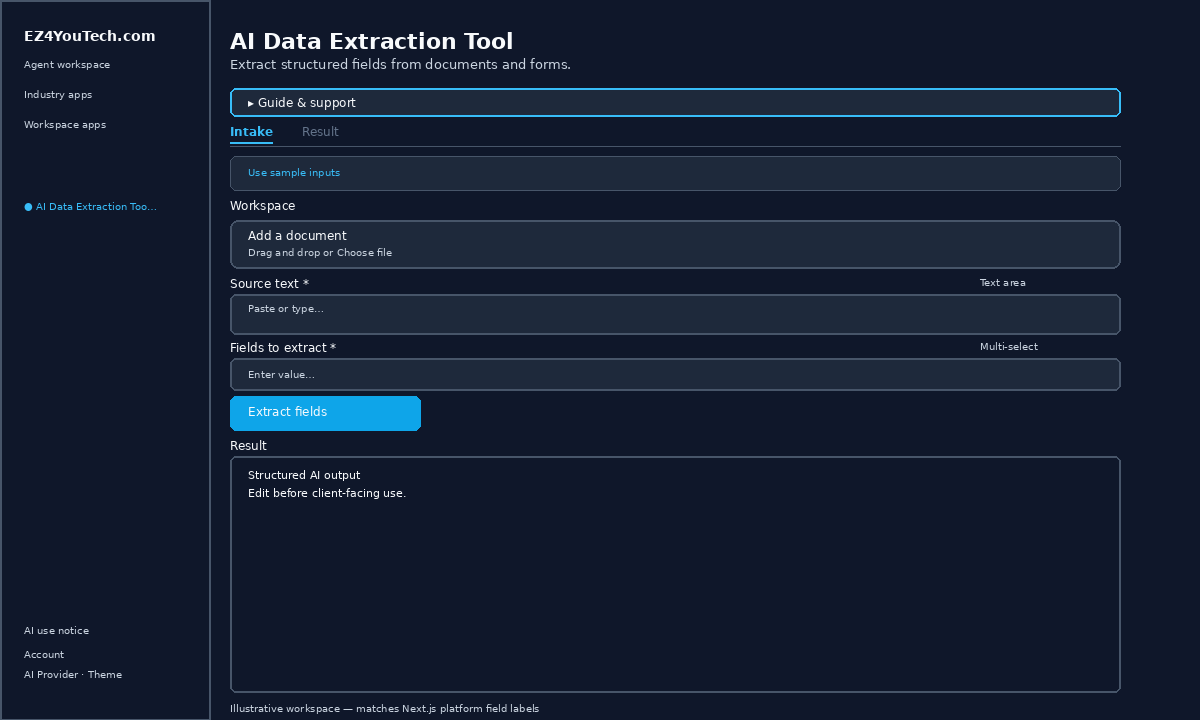
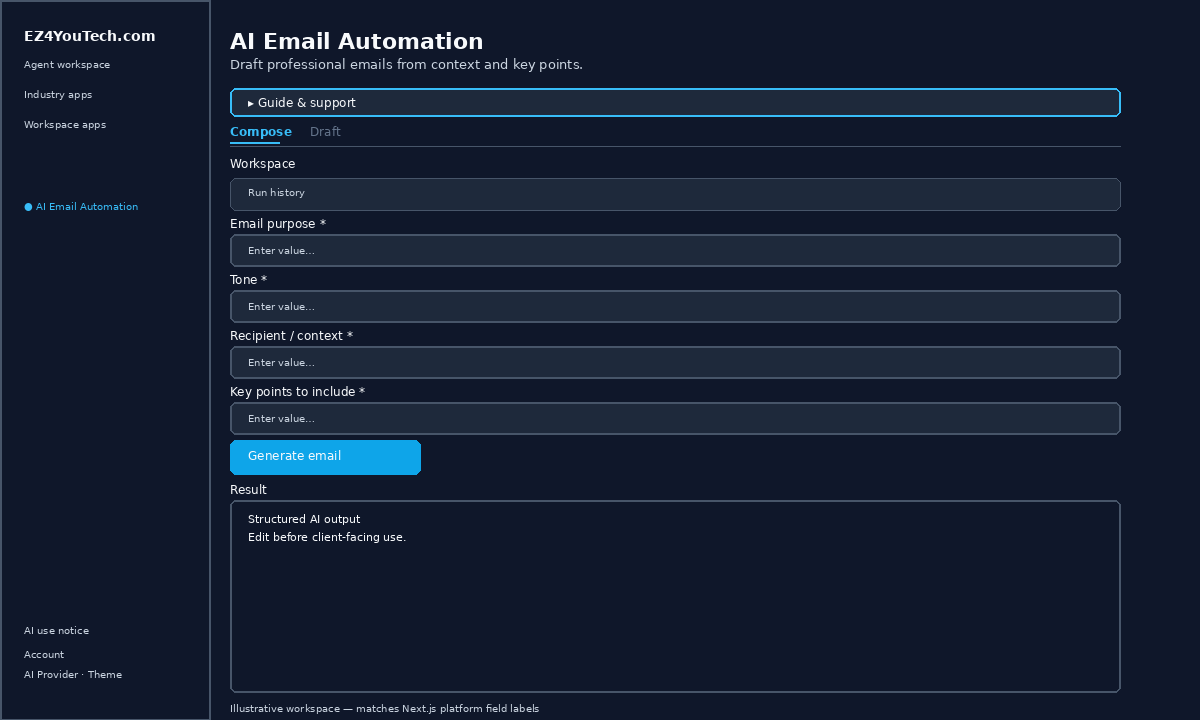
Upload to Document Analyzer, push structured fields through Data Extraction, email the exception owner with Email Automation, all in one tenant session. Supervisors review tone before anything client-facing goes out.
Finance teams love this chain because exceptions surface as rows, not mystery paragraphs. Support teams love it because the email draft pulls from the same fields the coordinator already validated.
Do not automate the exception path on day one. Let a human own edge cases for a month, you will learn which fields your apps are missing.
Governance without slowing the floor

Admins own provider setup and seats. Agents see only apps their plan unlocks. Usage dashboards show trends, not secrets.
Usage spikes often mean a new hire clicked ‘run’ five times on the same file, not a runaway model. Teach refresh discipline before you buy more seats.
Partner-referred tenants need the same SOP as direct signups. Referral does not bypass review on client-facing text.
Tuesday morning test

Pick the hour your inbox is worst, usually Monday/Tuesday after weekends. Time how long intake takes with your current tab sprawl. Run the same hour two weeks later with Document Analyzer open.
If coordinators still export PDFs to desktop ‘for safekeeping,’ fix storage habits before you buy Elite. Technology cannot cure duplicate folders.
Ops leaders should sit with the coordinator for one live run. Watching beats reading release notes.
Support handoff example
Tier-one draft lands in the tenant; supervisor edits tone; CRM note copies from structured fields, not from a chat transcript nobody else can find.
Field notes from recent pilots
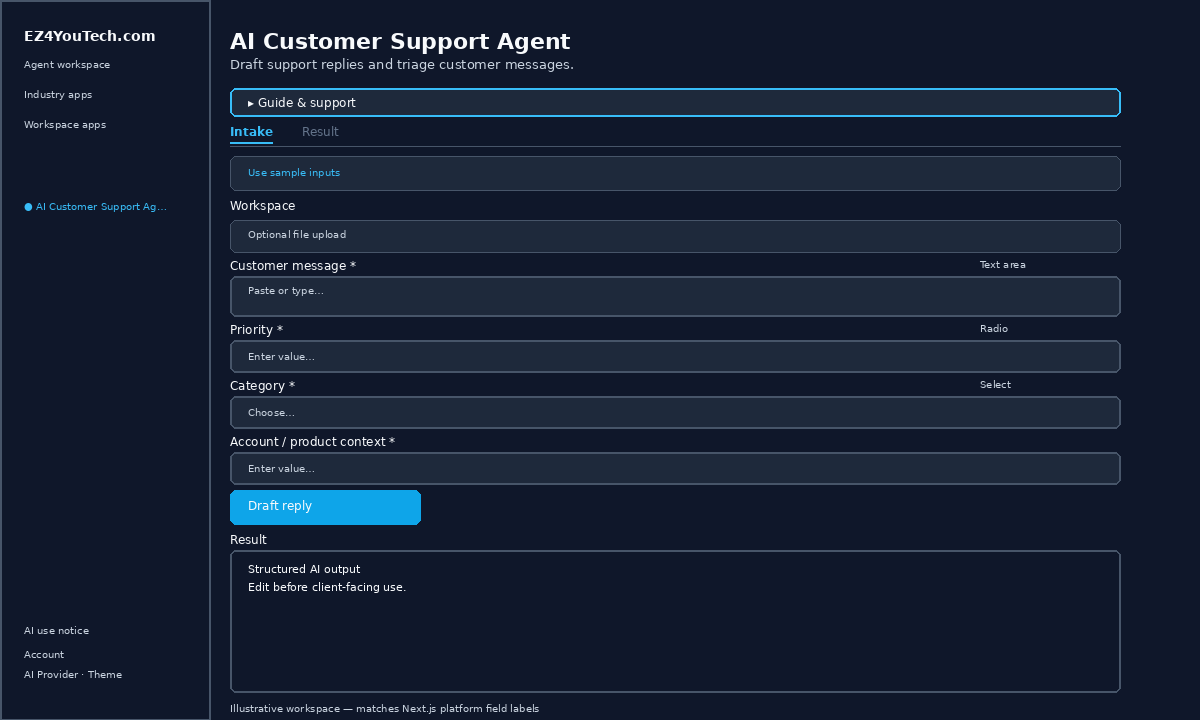
A property manager measured intake before/after Data Extraction, re-key errors dropped faster than summarization improved. Accuracy paid off before speed.
Coordinators asked for ‘copy to clipboard’ on structured fields; we pointed them to existing export patterns in their line-of-business tool instead of another shadow spreadsheet.
Night-shift support liked Email Automation because bullet inputs matched their ticket categories, no creative writing at 11 p.m.
When reopen rates climbed, the fix was approver training, not a new model. Tone drift shows up in metrics before customers complain.
Ops dashboards in the platform show token trends, use them to spot duplicate runs, not to judge individual agents.
Image credits
- Team planning business operations with technology · Unsplash, royalty-free license
- Operations queues mapped to catalog apps · EZ4YouTech.com illustration
- AI Data Extraction Tool structured output example · EZ4YouTech.com tutorial mockup
Illustrations and tutorial mockups are original to EZ4YouTech.com. Stock hero photos use Unsplash or Pexels licenses (see site image attribution records).
Next step
Ready to move from reading to doing? Start with a pilot or talk to our team.